The Complete Anatomy of an Arrow
So, you've got a bow. Cool. But the bow just provides the oomph... the arrow is what actually does the work. An arrow is a tiny flying machine where every part has a job. Knowing these parts helps you shoot safely, figure out why your shots are going wonky, and fix your own gear.
The Main Bits and Bobs
An arrow looks simple, but its four main parts work together for a stable, accurate flight. You've got the arrowhead, the shaft, the fletching, and the nock. Let's break 'em down.
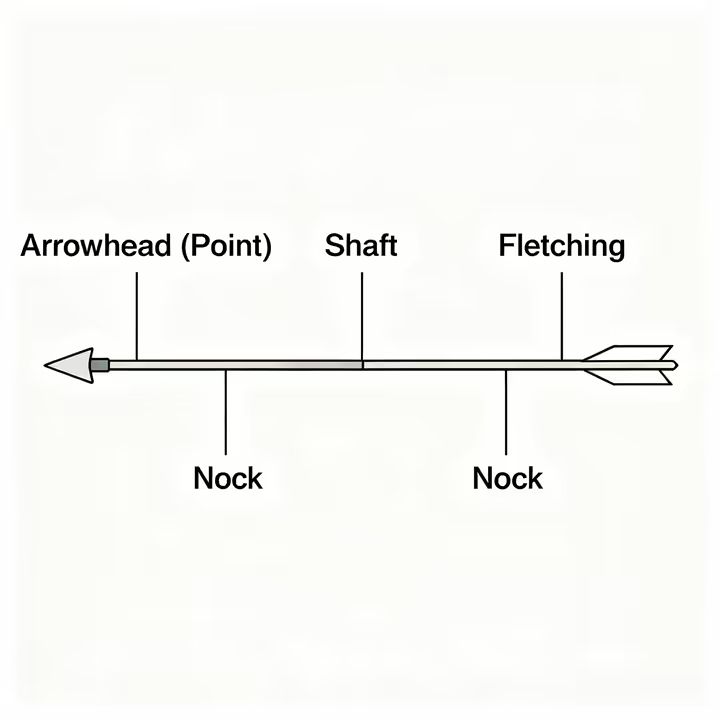
The Arrowhead (or Point)
The arrowhead is the "business end" of the arrow, designed to hit the target first. The type of point you use defines the arrow's job. Using the right one is key to being a safe and ethical archer.
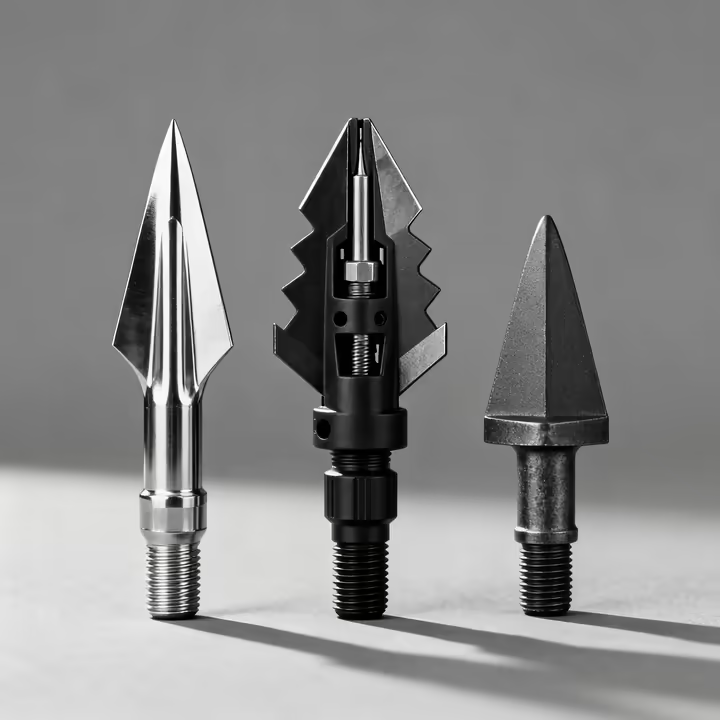
Field points are your standard practice tips. They have a simple cone shape made to poke holes in targets without wrecking them, which makes the arrows easy to pull out. Smart archers use field points that weigh the same (measured in grains) as their hunting broadheads, so practice shots fly just like the real deal.
Broadheads are for hunting big game. They have razor-sharp blades designed for a quick, ethical harvest. They come in fixed-blade and mechanical (blades pop out on impact) styles. Just remember, broadheads are for hunting only and will shred standard practice targets.
Blunt points are, well, blunt. These flat or rounded tips are for hunting small game or for practice where you want to deliver a thud without piercing the target.
The Shaft: The Body of the Arrow
The shaft is the arrow's long body, and everything else gets stuck onto it. The shaft's material, stiffness, and straightness are the biggest factors in how an arrow performs.
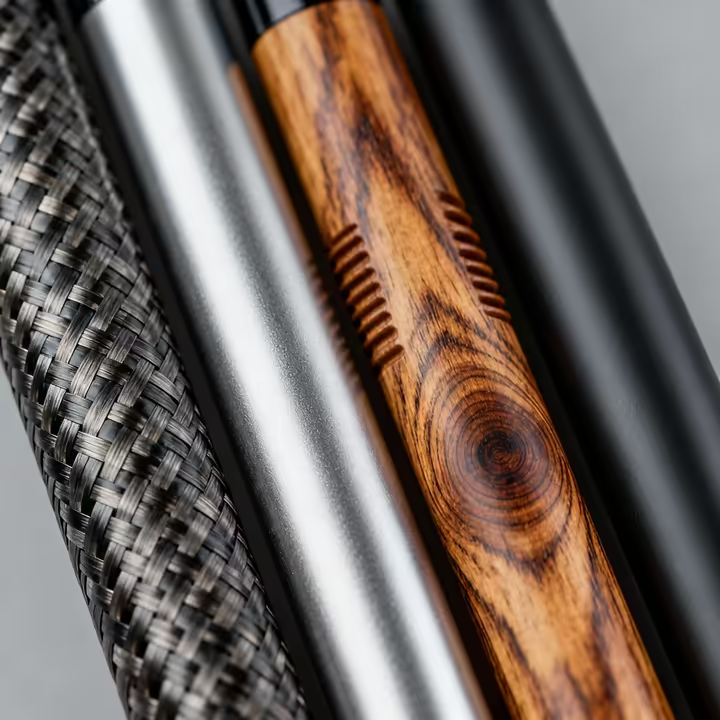
Carbon is the most popular material today. Carbon shafts are lightweight, strong, and fast, but they can be pricey. They can also get tiny, hidden cracks from hard impacts, so you have to inspect them carefully before shooting to avoid having one break apart.
Aluminum shafts are great for beginners because they're affordable and consistent. When an aluminum arrow gets damaged, it bends instead of cracking, which is much safer. The downside is that once it's bent, it's toast.
Wooden arrows are for traditional archers using longbows and recurves. They look classic but need a lot of care to keep from warping. Never, ever use wooden arrows with a modern compound bow, the force can make them shatter into a dangerous mess.
Fiberglass shafts are super durable and cheap but also heavy. They're mostly used for youth archery and bowfishing, where the extra weight helps the arrow punch through water.
The most important property of a shaft is its spine, which is just a measure of its stiffness. When you shoot, the string's force makes the arrow flex like crazy (this is called the archer's paradox). For the arrow to fly straight, its spine has to be matched to the bow's power.
An arrow that’s too flexible (weak spine) for the bow will wobble all over the place and could even break. One that's too stiff won't flex enough to fly right, killing your accuracy. Here’s the confusing part, a lower spine number (like 340) means a stiffer arrow, while a higher number (like 500) means a more flexible one. Always use the manufacturer's chart or ask a pro to find the right spine for your bow.
Shafts also have a straightness rating, measured in thousandths of an inch (like ±.006" or ±.001"). A smaller number means a straighter, more expensive arrow. For a beginner, the difference is basically zero, so don't sweat it.
The Fletching: Steering Fins
The fins at the back of the arrow are the fletching. They act like stabilizers on a rocket, using drag to keep the arrow flying straight and spinning. Without fletching, an arrow would just tumble through the air.

Plastic vanes are the modern standard, especially for compound bows. They’re tough, completely waterproof, and great for hunting in any weather. But they're stiff, so if they hit the bow on the way out, it can mess up the shot.
Natural feathers (usually from turkeys) are the go-to for traditional archers. Feathers are super forgiving; if one hits the bow's shelf, it just flattens and gets out of the way without affecting the shot. They aren't waterproof and are less durable than plastic vanes.
Most arrows have three fletchings, which is a perfect setup for beginners. Some archers prefer a four-fletch setup, which can offer a bit more stability, especially with big broadheads. A neat trick with four fletches is that you can nock the arrow without looking down, since they're spaced evenly.
You'll notice one fletching is a different color. That’s the index fletch (or "cock feather"). It’s your visual guide for nocking the arrow correctly, ensuring the other two "hen" fletches don't smack into your bow's riser or cables.
The Nock: The Clicky Bit
Way at the back is the nock. It’s a small plastic part with a slot, and its job is to clip the arrow securely onto the bowstring. When you put an arrow on the string, you should hear and feel a little "click".
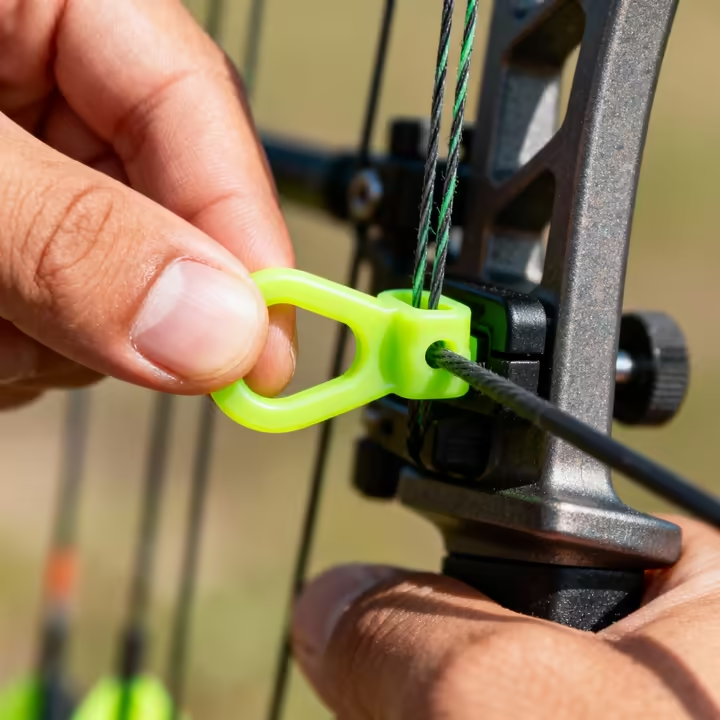
The nock's fit is super important. If the nock is too loose, the arrow can fall off as you draw, which is both annoying and dangerous. A "dry fire", releasing the string without an arrow, can wreck your bow. If it’s too tight, it won't release cleanly, sending your arrow flying wild.
Nocks are usually plastic and just press into the end of a carbon or aluminum shaft (press-fit nocks). Other types exist, like overnocks (slide over the shaft) and pin nocks (a two-part system for pros). They come in different sizes to fit different shafts and strings.
The Extra Bits
Besides the big four, modern arrows have a few smaller, hidden parts. These bits make arrows more versatile and durable.
The Insert and Outsert
Since most modern shafts are hollow, they need an insert to attach a screw-in arrowhead. An insert is a small metal cylinder that's glued into the front of the shaft. It has threads inside, so you can easily swap between field points and broadheads on the same arrow.
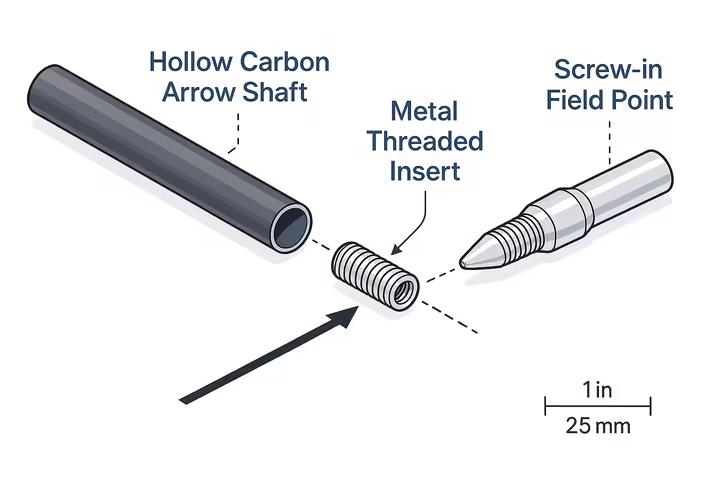
Inserts also come in different weights, from light aluminum to heavy brass. Using a heavier insert adds weight to the arrow and shifts its balance forward. This is an advanced tuning trick to make an arrow more stable and penetrate deeper.
An outsert does the same job as an insert, but it slides over the outside of the arrow shaft. This both provides threads for the point and adds a layer of reinforcement to the front of the arrow.
Collars and Rings
Carbon arrows are tough, but a hard, direct hit can make them splinter. To prevent this, you can add small metal rings called collars. They slide over the shaft and act like armor.
A collar at the front of the arrow stops the shaft from splitting or mushrooming on a hard impact. A collar at the back protects the shaft from a "Robin Hood", which is when you shoot one arrow directly into the back of another. These little rings are a cheap investment to make your expensive arrows last longer.
Putting It All Together: How an Arrow Flies
When you fire an arrow, a lot happens in a split second. All the parts do their jobs in perfect order to turn bow power into an accurate shot.
It starts when you clip the nock onto the string, using the index fletch to get the orientation right. At full draw, the bow's limbs are loaded with energy. On release, that energy slams into the nock.
This force makes the arrow shaft bend and wiggle violently, a phenomenon called the archer's paradox. The arrow has to bend around the bow's riser to get clear. A correctly spined arrow bends just the right amount and straightens itself out, while the wrong spine sends it flying off course.
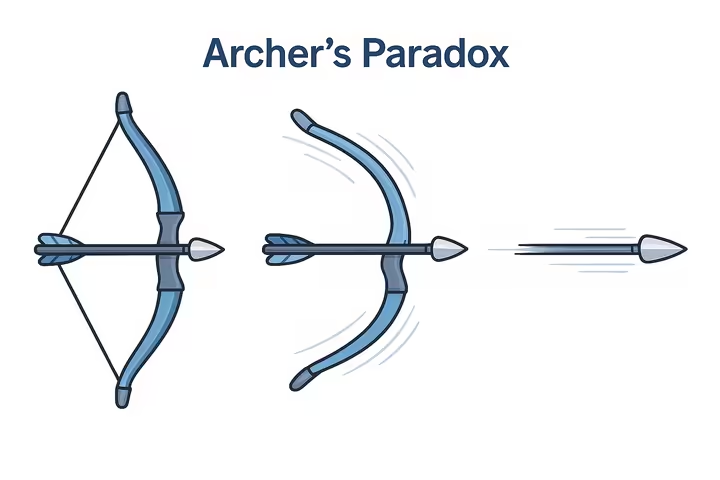
As soon as the arrow clears the bow, the fletching takes over. Drag from the fletching keeps the heavy point aimed forward. Any angle on the fletching makes the arrow spin like a bullet, stabilizing its flight and helping it cut through crosswinds.
Clearing the Air: Common Questions
The archery world has its own lingo, which can be confusing. Let's clear up a few common questions.
How Many Parts Does an Arrow Have?
This depends on how you count. For a beginner, it’s best to think of four essential parts, the arrowhead, shaft, fletching, and nock. These are the core bits every arrow needs to work.
You could count the insert as a fifth part, since most modern arrows need one. If you add optional things like collars or decorative wraps, the number goes up. Just focus on the main four, point, shaft, fletching, and nock.
What Are the "Four Points" of an Arrow?
This question usually comes from a mix-up in terms. An arrow has only one point, the arrowhead at the front. The term "four points" doesn't mean anything in archery.
The Symbolic Meaning of an Arrow
The arrow is more than just a piece of gear, it's a big-time symbol in many cultures. It often represents direction, focus, and achieving goals.
You have to pull an arrow backward to shoot it forward. People see this as a symbol for overcoming setbacks to move ahead. As an ancient tool for hunting and defense, it also stands for providing for your family and protection.
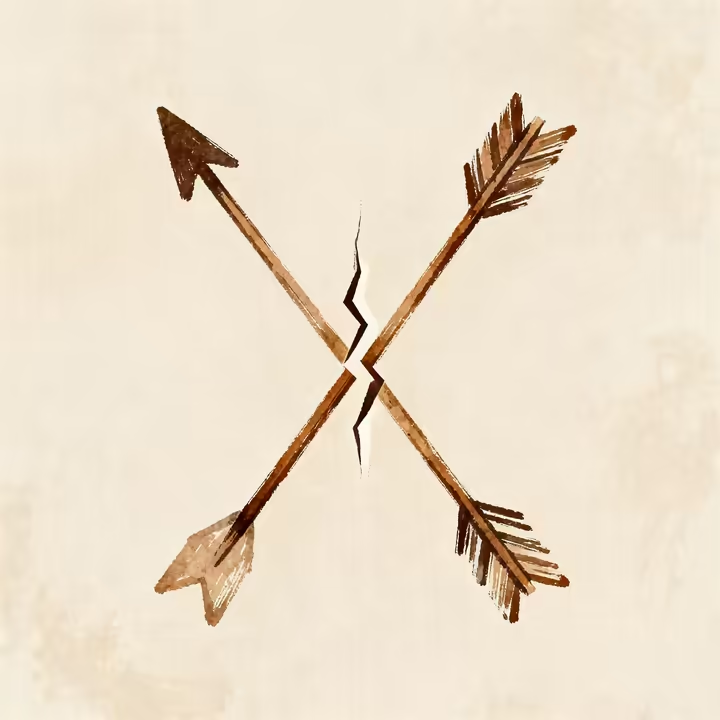
Different arrow symbols have unique meanings. Cupid's arrow means love. In some Native American traditions, two crossed arrows mean friendship, while a broken arrow is a universal symbol for peace.
Okay, What Now?
So there you have it, the anatomy of an arrow. Now that you know the lingo, the best next step is to get hands-on. Pick up an arrow, with a mentor's help, and point out the parts. By connecting these ideas to a real object, you’ll be ready to hit the shooting line.
Works cited
- Arrows 101 - Archery 360, https://archery360.com/2018/11/28/arrows-101/
- Bowhunting Basics: Understanding the Parts of an Arrow - ilearntohunt.com, https://www.ilearntohunt.com/blog/bowhunting-basics-understanding-the-parts-of-an-arrow/
- A beginner's guide to arrows : r/Archery - Reddit, https://www.reddit.com/r/Archery/comments/r5suuw/a_beginners_guide_to_arrows/
- Ultimate Beginners Guide to Archery, https://archery360.com/2020/04/30/ultimate-beginners-guide-to-archery/
- Parts of an Arrow - Hunter Ed, https://www.hunter-ed.com/pennsylvania/studyGuide/Parts-of-an-Arrow/20103901_88567/
- MAKING SENSE OF ARROW SPINE - Easton Archery, https://eastonarchery.com/2014/07/making-sense-of-arrow-spine/
- Parts Of An Arrow [Beginner's Guide] - Hunter's Wholesale, https://hunterswholesale.net/blogs/news/parts-of-an-arrow
- Why You Should Always Match Your Arrows To Your Bow - Legend Archery, https://legendarchery.com/blogs/archery-bowhunting-blog/why-you-should-always-match-your-arrows-to-your-bow
- Archery 101: Beginner's Guide to Equipment and Techniques - Social Circle Ace Home Center, https://www.socialcircleace.com/the-complete-beginners-guide-archery-101
- What is an Arrow? Beginners guide to the Anatomy of the Arrow - YouTube, https://www.youtube.com/watch?v=0rmwQTUp7do
- anatomy-arrow - arco vienna club, https://en.arco-vienna.at/anatomy-of-an-arrow.html
- Parts Of An Arrow (Beginner's Guide) - YouTube, https://www.youtube.com/watch?v=wsuXTnI8zxY
- Arrow: Components, Specifications & How it's Made - Sportsmatik, https://sportsmatik.com/sports-corner/sports-equipage-detail/arrow
- Arrow - Wikipedia, https://en.wikipedia.org/wiki/Arrow
- The Shaft - Bowhunter Ed, https://www.bowhunter-ed.com/national/studyGuide/The-Shaft/301099_185398/
- Skill Builder: Choosing Arrows|August-September 2014| TPW ..., https://tpwmagazine.com/archive/2014/aug/scout7_skillbuilder_choosingarrows/
- What arrows should I be using? - Learn about Archery, https://startarchery.co.uk/learn/what-arrows-should-i-be-using
- Basic Guide to Buying Hunting Arrows - Lancaster Archery Supply, https://lancasterarchery.com/blogs/product-info/basic-guide-to-buying-hunting-arrows
- Least to most durable arrow material? Fiberglass, Aluminium, Carbon : r/Archery - Reddit, https://www.reddit.com/r/Archery/comments/r5ktx8/least_to_most_durable_arrow_material_fiberglass/
- Arrow Selection Tips - 3Rivers Archery, https://www.3riversarchery.com/arrow-selection-tips.html
- The Pros and Cons of Different Arrows - TheCrossbowStore.com, https://woodsarcheryrange.com/blogs/woodsarcheryrange/the-pros-and-cons-of-different-arrows
- Spine and Archer's Paradox - Hunter Ed, https://www.hunter-ed.com/nebraska/studyGuide/Spine-and-Archer-s-Paradox/20103002_83803/
- Cracking the Code of Arrow Spine: Your Key to Perfect Archery Precision!, https://altraarrows.com/blogs/news/cracking-the-code-of-arrow-spine
- Arrow Tuning For Beginners - anurbanoutdoorsman.com, https://anurbanoutdoorsman.com/beginner-archery-arrow-tuning/
- Arrow Spine Chart: How to Choose the Perfect Spine for Maximum Accuracy, https://nockonarchery.com/choosing-the-correct-arrow-spine/
- Carbon Arrow Straightness & Arrow Diameter, Research Guide ..., https://www.huntersfriend.com/carbon-arrow-straightness-diameter-research-guide.html
- Arrow Basics: Parts of An Arrow - The Bearded Butchers, https://beardedbutchers.com/blogs/news/arrow-basics-parts-of-an-arrow
- A Beginner's Guide to Archery. - Reddit, https://www.reddit.com/r/Archery/comments/bg44jn/a_beginners_guide_to_archery/
- Fletching - Bowhunter Ed, https://www.bowhunter-ed.com/newyork/studyGuide/Fletching/30103501_9646/
- 3 Fletch vs. 4 Fletch Arrows - DeerCast, https://app.deercast.com/app/feed/item/21525
- To four fletch or not to four fletch, that is the question..... - Day Six Gear, https://www.daysixgear.com/blogs/news/to-four-fletch-or-not-to-four-fletch-that-is-the-question
- 4 Fletch Arrows - Trad Gang.com, https://www.tradgang.com/tgsmf/index.php?topic=180728.0
- 4 Fletch vs 3 Fletch - Traditional Bowhunter Magazine, https://tradbow.com/forums/topic/4-fletch-vs-3-fletch/
- Index Feather Fletching - Legend Archery, https://legendarchery.com/pages/index-feather
- Why is there a cock vane/feather? - The Great Outdoors Stack Exchange, https://outdoors.stackexchange.com/questions/17404/why-is-there-a-cock-vane-feather
- Cock feather orientation | saddlehunter.com, https://saddlehunter.com/community/index.php?threads/cock-feather-orientation.35743/
- NOCKED AND READY TO ROCK 4 - Choosing a arrow insert - YouTube, https://www.youtube.com/watch?v=6owPYaZyWG8
- Insert/outsert/HIT/Half out Inquiry : r/bowhunting - Reddit, https://www.reddit.com/r/bowhunting/comments/1m8e48v/insertoutserthithalf_out_inquiry/
- The be-all and end-all definitive guide for how to build the perfect arrow - gohunt, https://www.gohunt.com/browse/gear-lists-and-reviews/archery/the-be-all-and-end-all-definitive-guide-for-how-to-build-the-perfect-arrow
- Elk Hunting Arrows Outserts vs Inserts Explained! - YouTube, https://www.youtube.com/shorts/xuVq9X90MN8
- How To: Choose Inserts and Outserts - YouTube, https://www.youtube.com/watch?v=ciAJ2dg4WIw
- How I build my most durable arrows so far, thanks to protector rings ..., https://www.reddit.com/r/Archery/comments/og3nyb/how_i_build_my_most_durable_arrows_so_far_thanks/
- Impact Collars - Iron Will Outfitters, https://ironwilloutfitters.com/products/impact-collars
- What are these? : r/Archery - Reddit, https://www.reddit.com/r/Archery/comments/1j4uueb/what_are_these/
- Nock Collars - Arrow Reinforcement - 3Rivers Archery, https://www.3riversarchery.com/nock-collars-arrow-reinforcement.html
- Archer's paradox - Wikipedia, https://en.wikipedia.org/wiki/Archer%27s_paradox
- ELI5: What is the archer's paradox? : r/explainlikeimfive - Reddit, https://www.reddit.com/r/explainlikeimfive/comments/9fbtix/eli5_what_is_the_archers_paradox/
- Arrows & Arrow Flight: Recurve Bow Tuning - Lograrco, http://www.lograrco.es/pdf/arrows_arrow_flight.pdf
- Arrow Fletching Options & Why They're Important - Bowhunter, https://www.bowhunter.com/editorial/how-important-is-arrow-fletching/383743
- Arrow Symbolism in Jewelry: What It Really Means - Aureus Boutique, https://www.aureusboutique.com/blogs/articles/arrow-symbolism-in-jewelry-what-it-really-means
- The Profound Symbolism and Diverse Meanings Behind Arrow Tattoos | HowStuffWorks, https://people.howstuffworks.com/culture-traditions/body-art/arrow-tattoo-meaning.htm
- Arrow Symbolism in Jewelry - A History Symbol of Strength and Prosperity, https://www.jewelry-auctioned.com/learn/buying-jewelry/arrow-symbolism-in-jewelry
- www.jewelry-auctioned.com, https://www.jewelry-auctioned.com/learn/buying-jewelry/arrow-symbolism-in-jewelry#:~:text=In%20primitive%20times%20arrows%20were,infringing%20on%20a%20person's%20wellbeing.