The Modern Archer's Guide to the Recurve Bow
So you want to get into archery with a recurve bow. Good choice. This guide walks you through the basics, from the bow's history and parts to how to pick and string one yourself. No weird jargon, promise.
What's a Recurve Bow Anyway?
The recurve bow is a direct link to a key invention in human history, a tool that shaped empires. Its cool-looking curves aren't just for show, they give it a mechanical advantage over older bows. Holding one today connects you to a 3,000-year-old line of hunters, soldiers, and athletes.
The recurve popped up in the ancient world, invented by the Assyrians about 2,800 years ago. 1 Before that, bows were simpler. Nomadic horse riders on the Eurasian steppes, like the Scythians and Mongols, quickly adopted and perfected the design. 3
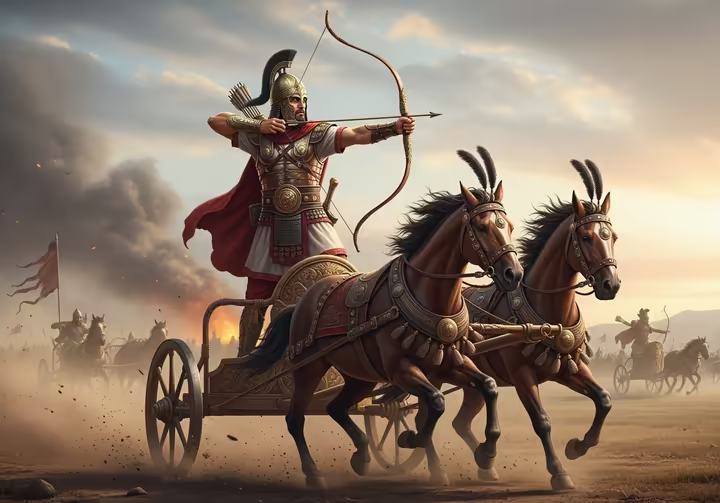
For these warriors, the recurve was the ultimate weapon. It was compact enough for horseback but packed a punch comparable to bigger longbows. 1 This power and portability made it a "super weapon" of its time, helping armies like Genghis Khan's change the course of history. 3
The magic is in the curves. A normal longbow is a simple "D" shape, but a recurve's limbs curve toward you in the middle, then sweep back away from you at the tips. 1 When the bow is unstrung, these tips curve dramatically forward.
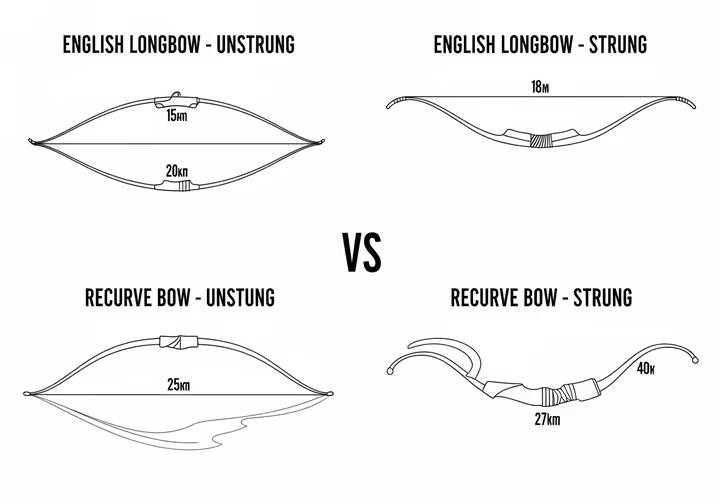
Stringing the bow puts a bunch of energy into the limbs before you even start to draw. As you pull the string back, you store even more energy than a straight-limbed bow can handle. 9 When you let go, all that energy zings the arrow out faster and with a flatter path. 10
The physics are the same, but the materials have changed over time. Ancient bows were amazing composites of wood, animal horn, and sinew glued together. 3 These bows were powerful but hated damp weather, which is why they weren't big in rainy Western Europe. 3
Today's recurves use laminated wood or bamboo cores layered with fiberglass and carbon fiber. The risers (the handle part) are made from machined aluminum or carbon composites. 2 The recurve is the only bow allowed in the Olympics, proving it’s the top dog for pure archery skill. 3 For today's archer, the recurve is a cool mix of tradition and high-tech performance.
The Parts of a Recurve Bow
Let's start with the riser , the central handle part that doesn't bend. 15 This is the bow's command center where everything else attaches. Traditional risers are often made of laminated hardwoods like maple or rosewood for a classic feel, while modern target bows use stiff aluminum or carbon fiber risers to prevent any flexing when you shoot. 17, 2
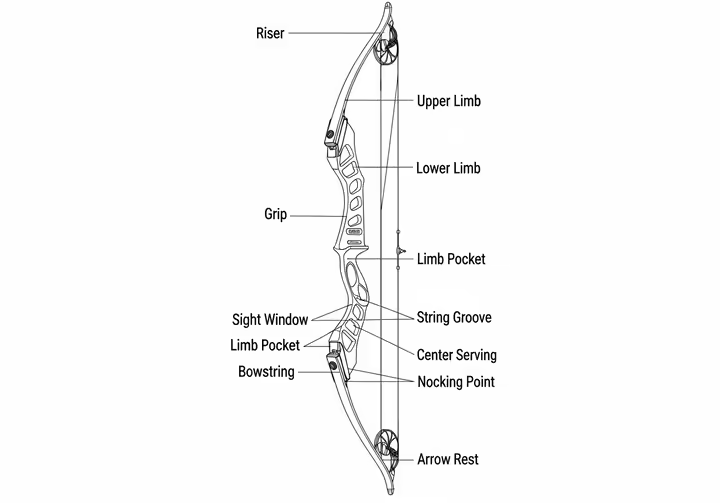
Carved into the riser is the grip , where your hand goes, and the sight window , a cutout that gives the arrow a clear path to the target. 16, 2
The two limbs extend from the riser, they're the bendy parts that store all the energy. 15 Modern limbs are usually a sandwich of wood or foam between layers of fiberglass or carbon fiber. 16 The limbs slot into limb pockets on the riser, and at the very tip of each limb is a string groove (or nock) that holds the bowstring. 2
The bowstring connects the two limb tips, turning stored energy into arrow speed. 15 It's actually a bundle of strong synthetic strands twisted together. The string is wrapped with tougher thread in high-wear areas, this is called the serving . 2
The center serving is where you nock (or clip) the arrow. A small brass clamp or thread called the nocking point marks the exact spot to place the arrow every time for consistency. 15
The arrow sits on an arrow rest , a small perch on the riser. 16 On traditional bows, this might just be a carved ledge called the "shelf". 15 Target bows use fancy spring-loaded rests that get out of the way when the arrow flies past.
Traditional vs. Modern Setups
A bow's parts tell you what it's for. A simple wood bow with a shelf rest is for intuitive, instinctive shooting, where the archer does all the work of aiming.
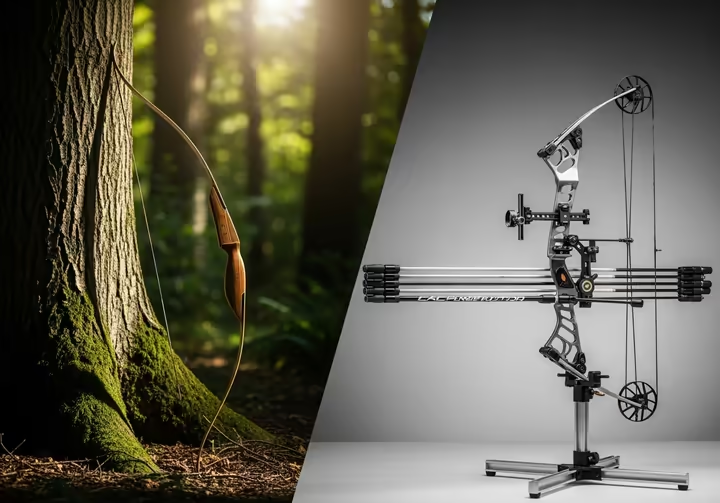
A modern Olympic recurve starts with the same parts but adds a bunch of accessories. A sight helps with aiming, a clicker ensures you draw back the same amount every time, and stabilizers control balance and vibration. 16
This doesn't make it "easy", it just changes the challenge. Instead of relying on instinct, you're chasing mechanical perfection.
Hunting vs. Olympic Bows
Hunting Recurves (aka "Trad" Bows)
The modern hunting recurve, or "trad" bow, is built for the field, simple, durable, and quiet. They're usually shorter than target bows, around 58 to 62 inches, making them easier to handle in the woods. 6 The risers are almost always made from laminated hardwoods, which look great and absorb vibration for a quieter shot. 10
Most trad archers shoot "barebow", meaning no sights, they aim instinctively, like throwing a ball. 15 The arrow rests on the "shelf", and hunters often add fur or rubber string silencers to be extra stealthy. 25
Olympic Recurves
The Olympic recurve is a different beast, engineered for one thing: precision. 25 It's loaded with accessories. The most obvious is the adjustable sight for pinpoint aiming at different distances. 16
Then you have the stabilizers , a system of rods that stick out from the bow. They do more than just steady your aim, they absorb vibration when you release the arrow, making the shot feel smooth. 2
Olympic archers also use a clicker , a little blade that makes an audible 'click' when they reach their perfect draw length. 16 A plunger (or pressure button) is a spring-loaded button that pushes the arrow slightly away from the riser, helping it fly perfectly straight. 2
Takedown vs. One-Piece Bows
There's one more big choice: one-piece or takedown. A one-piece bow is made from a single, seamless unit. 26 They look slick and feel great, but they're not very versatile.
A takedown bow is modular, the two limbs can be detached from the riser. 15 This is a huge plus for beginners. You can take it apart for easy transport and storage. 31
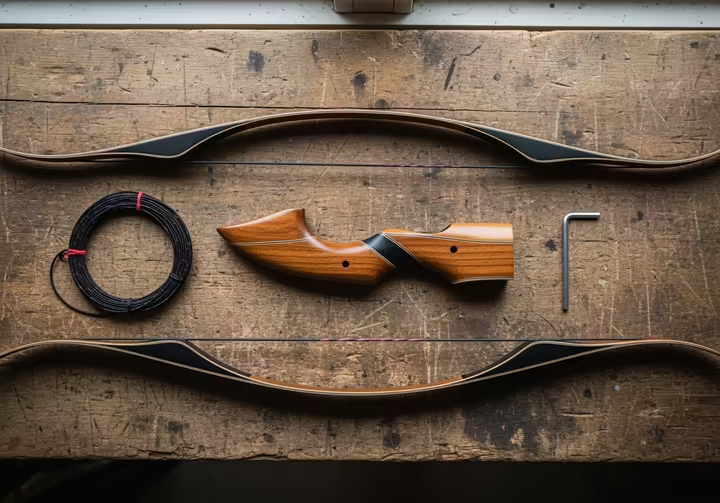
Best of all, you can swap out the limbs. As you get stronger, instead of buying a whole new bow, you just buy a stronger set of limbs and pop them on your old riser. 15 This makes takedown bows perfect for beginners because the bow can grow with you.
How to String Your Bow (Safely!)
Okay, before you can shoot, you need to string the bow. This turns it from a collection of parts into something that stores a lot of energy, so you have to do it right. For beginners (and most everyone else), the only safe way is with a tool called a bow stringer . 33
Don't be tempted to use other methods, like the "step-through" method. They are super dangerous for you and the bow, as they can easily twist and permanently damage the limbs. 35 Worse, a limb tip could slip while under tension and smack you in the face, which is... not good. 35 A bow stringer is a cheap, simple tool that applies even pressure and keeps everything safe.
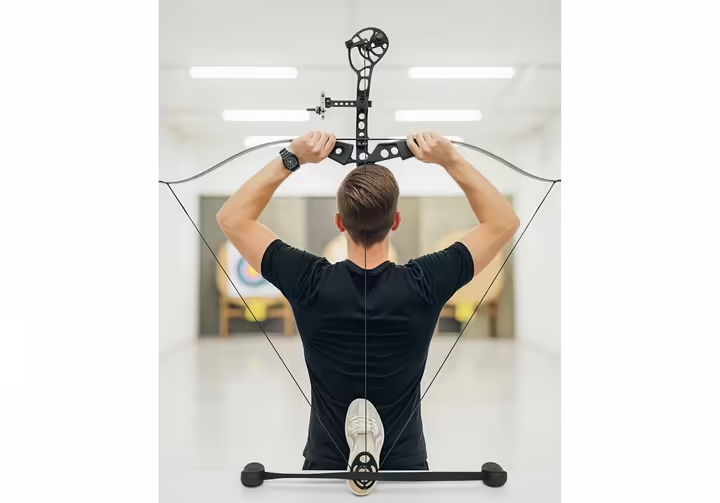
Using a bow stringer is easy once you get the hang of it. First, find the two loops on the bowstring, the big one goes on the top limb, the small one on the bottom. 39 Slide the big loop down the top limb a few inches, then seat the small loop securely in the bottom limb's string groove. 33
Next, attach the stringer. Put the stringer's pocket over the bottom limb tip (covering the string loop), and place the saddle part on the upper limb, just below the waiting string loop. 39, 40
Hold the bow sideways, step on the stringer's cord with both feet, and pull straight up on the riser. 33, 40 This flexes the limbs safely. Slide the top string loop up into its groove, then slowly lower the riser. Double-check that both loops are seated properly before you do anything else. 39
How to Choose Your First Bow
Picking your first bow is exciting, but don't just grab the most powerful-looking one. A beginner's first bow is a training tool . Its job is to let you learn good form without getting tired or building bad habits.
The "best" beginner bow is one that feels light, so you can focus on technique. Let's look at the key things to consider.
Draw Weight
The most important thing to get right is the draw weight . This is how many pounds of force it takes to pull the string back 28 inches. 22 A common mistake is getting a draw weight that's too high.
Good archery form uses your big back muscles, not your arms. 45 If the weight is too heavy, you'll use the wrong muscles, learn bad habits, and risk shoulder injury. 45
For most adults, a 20-30 pound draw weight is a good starting point. 46 If you get a takedown bow, you can always buy stronger limbs later. 28
Draw Length
Your draw length is how far you pull the string back. To get a rough idea of yours, use the "wingspan method". Stand with your arms stretched out to your sides, like a 'T'.
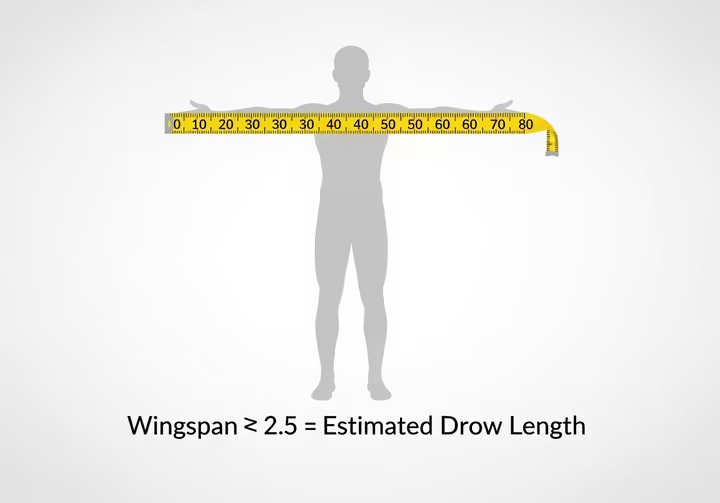
Have a friend measure from the tip of one middle finger to the other. Take that number (in inches) and divide it by 2.5. 49 That's a good estimate of your draw length.
| Wingspan (inches) | Estimated Draw Length (inches) |
|---|---|
| 60 | 24.0 |
| 62 | 24.8 |
| 64 | 25.6 |
| 66 | 26.4 |
| 68 | 27.2 |
| 70 | 28.0 |
| 72 | 28.8 |
| 74 | 29.6 |
| 76 | 30.4 |
Bow Length
The bow's overall length (or AMO length) should match your draw length. If a bow is too short for your draw length, it'll feel harsh and "stack", meaning it gets much harder to pull at the very end. 6
If it's too long, it can feel slow and inefficient. A longer bow is generally smoother and more forgiving. As a rough guide, your draw length plus about 40 inches is a good bow length to aim for. 48
| Draw Length (inches) | Recommended Bow Length (inches) |
|---|---|
| 24 - 26 | 64 - 66 |
| 27 - 29 | 66 - 68 |
| 29 - 31 | 68 - 70 |
| 31+ | 70 - 72 |
Budget and Goals
Of course, think about your budget and goals. You can get a great beginner takedown recurve pretty cheaply. 28
Are you just shooting in the backyard, or do you want to compete or hunt? For almost any beginner, a takedown recurve is the smartest choice. 54 It's a versatile bow that can grow with you as you figure out what you like.
All About the Bow String
The bow string looks simple, but it's a critical part of the bow. It's what transfers all the energy to the arrow. Understanding your string helps you tune your bow's performance, sound, and feel.
String Materials
Modern bow strings are made from synthetic fibers. The most traditional and forgiving is Dacron (B-55). 55 It has a bit of stretch, which acts like a shock absorber for a softer, quieter shot. 55
Because it's gentler on the bow, Dacron is the only safe material for older, vintage bows that don't have reinforced limb tips. 57
The other category is low-stretch materials like Fast Flight , Spectra, and Dyneema. 55 These transfer more of the limbs' energy to the arrow for higher speed, but the shot is harsher and louder. 55 Only use these on modern bows that are rated for them. 58
String Construction
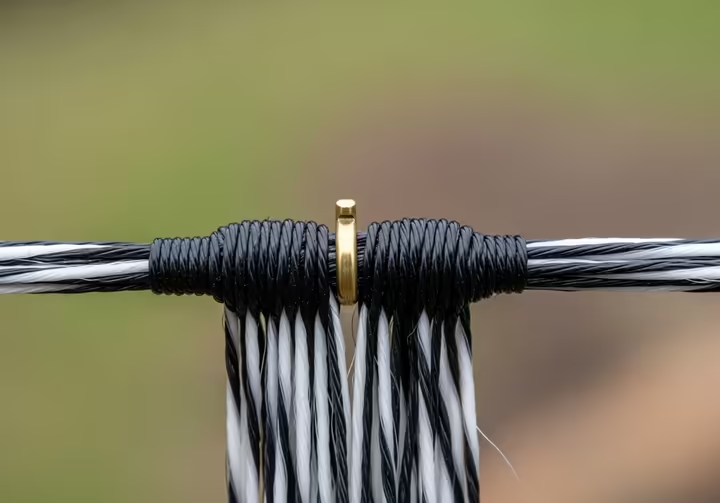
A bow string is a bundle of individual strands twisted together. 56 The number of strands depends on the bow's draw weight, more strands for a heavier bow. 56 The string is wrapped with a tough thread in high-wear areas, this is called the serving . 2 It protects the string at the loops and in the center, where you nock the arrow and hold the string. 59
Tuning: Brace Height
Brace height is the distance from the deepest part of the grip to the string when the bow is strung. 63 It's a key tuning adjustment. A lower brace height can give you more arrow speed, but might make the bow louder and less forgiving. 65
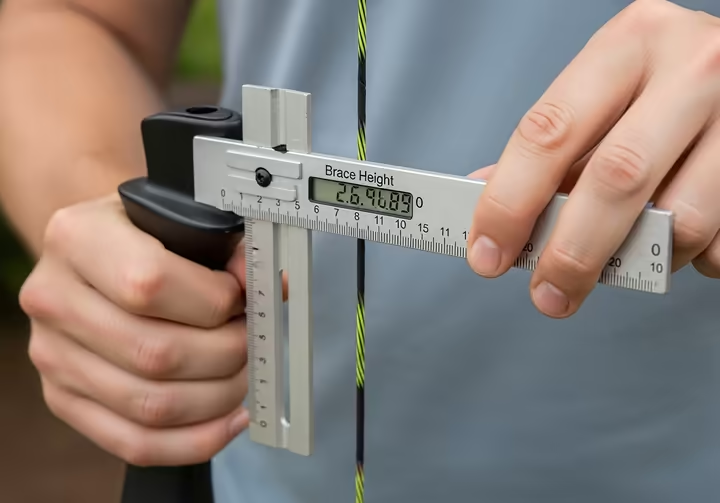
A higher brace height might be a little slower, but often makes the bow quieter and more stable. 64 You can adjust it by unstringing the bow and adding or removing twists from the string. Adding twists shortens the string and increases brace height, removing twists does the opposite. 63
String Maintenance
Your bow string needs a little love. The main thing is to wax it. Bowstring wax lubricates the fibers, holds them together, and keeps moisture out. 60
Just rub the wax stick on the string (not the serving), then rub it in with your fingers or a piece of leather. The friction melts the wax so it sinks in. 70 Wax it whenever the string starts to look dry or fuzzy.
Hunting with a Recurve Bow
Hunting with a recurve bow is a serious challenge. It's more than just shooting, it requires patience, skill in the woods, and respect for the animal. Choosing a recurve over a modern high-tech bow means you're accepting a much bigger challenge. 27
The Challenge
The biggest difference between hunting with a recurve and a modern compound bow is range. A recurve shoots slower and has no "let-off" to make it easy to hold at full draw. 10
This means your maximum effective range for a clean, ethical kill is short, usually 20 to 25 yards or less. 73 The challenge becomes getting that close. It's a game of stalking, using cover, and being totally silent, not long-range shooting.
Success is measured by the shots you don't take just as much as the ones you do. An ethical hunter must have the discipline to wait for a good opportunity or let the animal walk away unharmed.
Ethics and Shot Placement
This short range means you have to be really good. You need to practice relentlessly until you can consistently hit a small vital-sized area from any position within your effective range. 74, 75
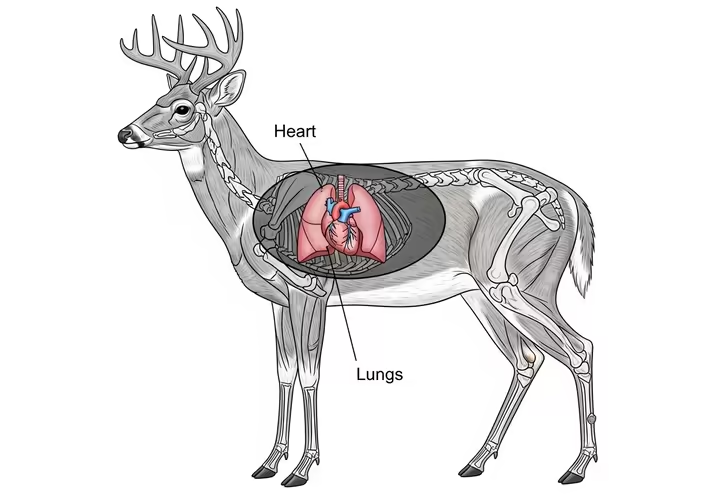
This is because an arrow kills by hemorrhage (bleeding), not shock like a bullet. The only ethical shot is at the vital heart-lung area for a quick, humane harvest. 75
You need to know animal anatomy and pass on bad shots. Head or neck shots are a no-go, and you have to wait for a broadside or slightly quartering-away angle. 79, 75
Hunting Gear
Your gear needs to be up to the task. Most places have a legal minimum draw weight for big game hunting, usually around 40 or 45 pounds, to ensure enough power for a clean kill. 72 You need to be able to handle this weight easily.
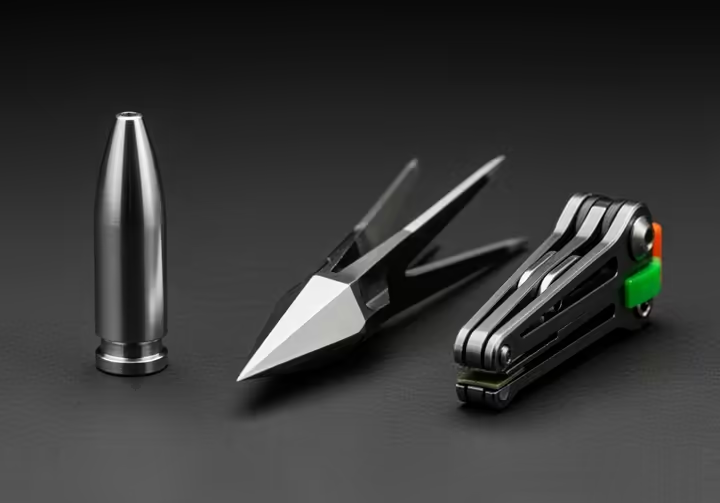
Hunting arrows are tipped with razor-sharp broadheads instead of practice points. 75 Keep them sharp!
To carry your arrows, a bow quiver that attaches to the riser is the most practical choice. It keeps arrows handy and secure, and the extra weight can even help quiet the bow down. 83
Works cited
- General Archery Information - Bowmen of Warfield, https://bowmenofwarfield.co.uk/index.php/welcome/general-archery-information/
- Parts of a Recurve Bow - Online Archery Academy, https://www.onlinearcheryacademy.com/parts-of-a-recurve-bow/
- Recurve bow - Wikipedia, https://en.wikipedia.org/wiki/Recurve_bow
- Bow and arrow | History, Construction & Uses - Britannica, https://www.britannica.com/technology/bow-and-arrow
- History of archery - Wikipedia, https://en.wikipedia.org/wiki/History_of_archery
- Longbow or Recurve? - Traditional Bowhunter Magazine, https://tradbow.com/longbow-or-recurve-2/
- The Composite Bow: The Medieval Precursor to the Rifle - Warfare History Network, https://warfarehistorynetwork.com/article/the-composite-bow-the-medieval-precursor-to-the-rifle/
- Difference between compound and recurve archery - Olympics.com, https://www.olympics.com/en/news/recurve-vs-compound-archery-difference
- The Difference Between a Longbow and Recurve Bow - LiveOutdoors, https://www.liveoutdoors.com/hunting/208929-the-difference-between-a-longbow-and-a-recurve-bow/
- Recurve vs Compound vs Traditional Longbows: Finding Your Perfect Match, https://bobleebows.com/recurve-vs-compound-vs-traditional-longbows-finding-your-perfect-match/
- Recurve vs Longbow | General Overview - YouTube, https://www.youtube.com/watch?v=3RxDScleEaY
- Why did Europeans use long bows to wage wars when recurves had been around for over a thousand years prior? - Quora, https://www.quora.com/Why-did-Europeans-use-long-bows-to-wage-wars-when-recurves-had-been-around-for-over-a-thousand-years-prior
- Recurve - World Archery, https://www.worldarchery.sport/sport/equipment/recurve
- Recurve bow - ArcheryKart, https://archerykart.com/blogs/archery/recurve-bow
- Parts of a Recurve Bow - The Complete Guide to Archery, https://www.completeguidetoarchery.com/parts-of-a-recurve-bow/
- Anatomy of an Olympic Recurve Bow - Jordan Sequillion - WordPress.com, https://jordansequillion.wordpress.com/archery/anatomy-of-an-olympic-recurve-bow/
- solid wood for recurve bow riser - saKIMA archery, https://www.sakimarchery.com/en/solidwood-for-riser/38-solid-wood-for-recurve-bow-riser.html
- 2023 Takedown Risers - Southwest Archery, https://www.southwestarcheryusa.com/collections/risers
- Timber Ridge T/D 60" Recurve - Riser - Kustom King Traditional Archery, https://kustomkingarchery.com/products/timber-ridge-t-d-60-recurve-riser
- Parts of a bow - Hunter Ed, https://www.hunter-ed.com/newsouthwales-bows/studyGuide/Parts-of-a-bow/203601_144468/
- Build a Recurve Bow - Popular Woodworking, https://www.popularwoodworking.com/article/build-a-recurve-bow/
- Traditional Archery: Part 1 – Recurve and Longbow Fundamentals - Wolf & Iron, https://wolfandiron.com/blogs/feedthewolf/traditional-archery-part-1-recurve-and-longbow-fundamentals
- Beginners Kit Guide - Start Archery, https://startarchery.co.uk/learn/beginners-kit-guide
- Olympic Recurve Bow Anatomy - Archery 360, https://archery360.com/2019/05/22/olympic-recurve-bow-anatomy/
- Difference between hunting and Olympic bows? : r/Archery - Reddit, https://www.reddit.com/r/Archery/comments/klwd1/difference_between_hunting_and_olympic_bows/
- Guide to different types of bows - Hattila, https://www.hattila.com/en/content/31-guide-types-bows
- What is the difference in shooting between traditional recurve and modern compound bows if you have decent form when drawing back the arrow? - Quora, https://www.quora.com/What-is-the-difference-in-shooting-between-traditional-recurve-and-modern-compound-bows-if-you-have-decent-form-when-drawing-back-the-arrow
- A Beginner's Guide to Traditional Archery - National Deer Association, https://deerassociation.com/a-beginners-guide-to-traditional-archery/
- Archery Bow Types & Types of Archery, https://archerygb.org/about/types-of-archery
- The Beginner's Guide to Traditional Archery - Petersen's Hunting, https://www.petersenshunting.com/editorial/beginners-guide-traditional-archery/272639
- Archery | One-Piece or Takedown Bows? - YouTube, https://www.youtube.com/watch?v=YSobufC0zW8
- Takedown recurve or one piece? : r/Archery - Reddit, https://www.reddit.com/r/Archery/comments/l9cvre/takedown_recurve_or_one_piece/
- How to String a Recurve Bow (with Pictures) - wikiHow, https://www.wikihow.com/String-a-Recurve-Bow
- Stringing a Bow - Hunter Ed, https://www.hunter-ed.com/pennsylvania/studyGuide/Stringing-a-Bow/20103901_88566/
- Always Use a Bow Stringer - The Complete Guide to Archery, https://www.completeguidetoarchery.com/always-use-a-bow-stringer/
- Is stringing a recurve without a stringer damaging to the bow? - The Great Outdoors Stack Exchange, https://outdoors.stackexchange.com/questions/8470/is-stringing-a-recurve-without-a-stringer-damaging-to-the-bow
- Why you should be using a bow stringer on your recurve bow - Chiltern Archery, https://www.chiltern-archery.co.uk/using-a-bow-stringer/
- Stringing your recurve without a stringer: is this a bad idea? : r/Archery - Reddit, https://www.reddit.com/r/Archery/comments/2p7vnv/stringing_your_recurve_without_a_stringer_is_this/
- How to use a Bow Stringer - YouTube, https://www.youtube.com/watch?v=VXOC3MsnMeo
- How to String a Bow - Archery 360, https://archery360.com/2019/06/19/how-to-string-a-bow/
- How to String a Recurve | Bear Archery - YouTube, https://www.youtube.com/watch?v=l6uH4JAPkeE
- Every time I read a tutorial on how to string a recurve i get confused. HELP - Reddit, https://www.reddit.com/r/Archery/comments/gn6u85/every_time_i_read_a_tutorial_on_how_to_string_a/
- how to use a bow stringer (Archery) - YouTube, https://www.youtube.com/watch?v=qKBB29GLonQ
- How to Choose a Recurve Bow - Minnehaha Archers, https://www.minnehaha-archers.com/files/How%20to%20Choose%20a%20Recurve_%20Bow.pdf
- What draw weight should a newbie start with if he is much stronger than most people? : r/Archery - Reddit, https://www.reddit.com/r/Archery/comments/ljy39r/what_draw_weight_should_a_newbie_start_with_if_he/
- What draw weight do you think beginners should start with? : r/Archery - Reddit, https://www.reddit.com/r/Archery/comments/14iopsj/what_draw_weight_do_you_think_beginners_should/
- Chart For Choosing Drawing Weight - Best Recurve Bow, https://www.bestrecurvebowguide.com/recurve-bow-draw-weight-chart-for-choosing-drawing-weight/
- Archery 101: How to buy your 1st recurve bow, https://www.worldarchery.sport/news/147465/archery-101-how-buy-your-1st-recurve-bow
- www.bowhunter.com, https://www.bowhunter.com/editorial/how-to-measure-your-draw-length/374942#:~:text=First%2C%20find%20a%20measuring%20tape,determine%20your%20proper%20draw%20length.
- How to Measure Your Draw Length - Bowhunter, https://www.bowhunter.com/editorial/how-to-measure-your-draw-length/374942
- How to Measure Draw Length: 2 Proven Methods for Perfect Bow Setup - Nock On Archery, https://nockonarchery.com/how-to-measure-draw-length/
- How To Buy A New Traditional Bow - Bowhunter, https://www.bowhunter.com/editorial/how-to-buy-a-new-traditional-bow/182296
- Recommendation for a beginner recurve? : r/Archery - Reddit, https://www.reddit.com/r/Archery/comments/y349rq/recommendation_for_a_beginner_recurve/
- Buying Your First Recurve Bow (Guide/Advice) : r/Archery - Reddit, https://www.reddit.com/r/Archery/comments/k33xyb/buying_your_first_recurve_bow_guideadvice/
- The Differences in B50 (Dacron), B-55, D-97 and 652 Spectra (Fast Flight) Bowstrings?, https://www.shatterproofarchery.com/blogs/bowstrings/whats-the-difference-in-b-55-d-97-and-652-spectra-fast-flight-bowstrings
- Bow String Guide - Quicks Archery, https://www.quicksarchery.co.uk/Bow-String-Guide
- Dacron vs Fast Flight - Traditional Bowhunter Magazine, https://tradbow.com/forums/topic/dacron-vs-fast-flight/
- Check This Before You Buy A New Bowstring! - Dacron vs Fastflight | Archery - YouTube, https://www.youtube.com/watch?v=oOasXbsosf0
- Recurve Bowstrings- A VITAL COMPONENT - Easton Archery, https://eastonarchery.com/2018/11/bowstring-tech-tips/
- Frequently Asked Questions - BCY Fibers, https://www.bcyfibers.com/FAQs.php
- What is the difference between dacron & fast flight string? : r/Archery - Reddit, https://www.reddit.com/r/Archery/comments/124or7d/what_is_the_difference_between_dacron_fast_flight/
- Learn Two Ways of How to Serve a Bow String - 3Rivers Archery, https://www.3riversarchery.com/blog/how-to-serve-a-bow-string/
- How to Adjust Brace Height - Archery 360, https://archery360.com/2020/07/29/how-to-adjust-brace-height/
- Brace Height Settings for Bob Lee Recurves and Longbows - Fistmele, https://bobleebows.com/brace-height-fistmele-settings/
- How to find the "ideal" brace height? : r/Archery - Reddit, https://www.reddit.com/r/Archery/comments/9isddz/how_to_find_the_ideal_brace_height/
- How to Measure and Adjust Brace Height for Recurve and Longbows - YouTube, https://www.youtube.com/watch?v=14pdFJylDZc
- How to Tune a Traditional Bow By Fred Eichler - Bear Archery, https://www.beararchery.com/blogs/base-camp-archery-blog/how-to-tune-a-traditional-bow-by-fred-eichler
- Archery 101: How to wax a bowstring, https://www.worldarchery.sport/news/143741/archery-101-how-wax-bowstring
- Wax or no wax on strings? : r/Archery - Reddit, https://www.reddit.com/r/Archery/comments/aih8d0/wax_or_no_wax_on_strings/
- How to perfectly wax a bowstring #archery #bowmaking - YouTube, https://www.youtube.com/shorts/524VlhNP0aY
- Here's a nice article on waxing your bow string | Elk101 Forums, https://forums.elk101.com/threads/heres-a-nice-article-on-waxing-your-bow-string.2893/
- Longbow vs recurve vs compound : r/Archery - Reddit, https://www.reddit.com/r/Archery/comments/3dsmjr/longbow_vs_recurve_vs_compound/
- Can You Hunt with a Recurve Bow? An In-Depth Guide to Traditional Archery - Battlbox.com, https://www.battlbox.com/blogs/hunting/can-you-hunt-with-a-recurve-bow-an-in-depth-guide-to-traditional-archery
- Honest question about hunting with a recurve. : r/bowhunting - Reddit, https://www.reddit.com/r/bowhunting/comments/1aoqvs4/honest_question_about_hunting_with_a_recurve/
- Traditional Archers Path | Deer Hunting With a Recurve Bow - October Mountain Products, https://www.octobermountainproducts.com/2019/07/deer-hunting-with-a-recurve-bow-tips
- Ethical bow hunting practices for big game - hillman gear, https://hillmangear.com/a/blog/ethical-bow-hunting-practices-for-big-game
- The Ethical Bow Hunting Shot, https://www.bowlife.com/the-ethical-shot/
- Effective Range and Ethical Shot Placement - Dive Bomb Industries, https://www.divebombindustries.com/blogs/news/effective-range-and-ethical-shot-placement
- Shot Opportunity Ethics vs. Shot Placement Ethics - Bowhunting.com, https://www.bowhunting.com/article/shot-opportunity-ethics-vs-shot-placement-ethics/
- Shot Placement Tips: Do's and Don'ts - Iron Will, https://ironwilloutfitters.com/blogs/scientific-reports-bowhunting-blog/shot-placement-tips-dos-and-donts
- www.bestrecurvebowguide.com, https://www.bestrecurvebowguide.com/recurve-bow-draw-weight-chart-for-choosing-drawing-weight/#:~:text=If%20you%20plan%20on%20hunting,will%20often%20be%20the%20case).
- What is the bare minimum draw weight needed for a hunting bow? - Quora, https://www.quora.com/What-is-the-bare-minimum-draw-weight-needed-for-a-hunting-bow
- A Beginner's Guide to Traditional Bowhunting | An Official Journal Of The NRA, https://www.americanhunter.org/content/a-beginner-s-guide-to-traditional-bowhunting/
- The Essential Bow Hunting Checklist - Pelican, https://www.pelican.com/us/en/discover/pelican-flyer/post/bow-hunting-checklist/